

The global industrial landscape is undergoing a profound transformation. As automation, artificial intelligence, and robotics integrate deeper into manufacturing, logistics, and professional services, the traditional definition of a job is being rewritten. This shift is not merely about machines replacing human labor; it is about the fundamental recalibration of what humans do within the workplace. Understanding this transition is essential for professionals, business leaders, and policymakers aiming to navigate an era defined by high-tech integration.
The Shift from Manual Execution to System Oversight
For decades, industrial labor was defined by repetitive, manual execution. Assembly lines, data entry, and basic quality control were tasks performed by human workers who functioned as the mechanical gears of a company. Today, automation has largely absorbed these high-repetition tasks. Robots now handle welding, precise assembly, and hazardous material handling with a level of consistency that exceeds human capability.
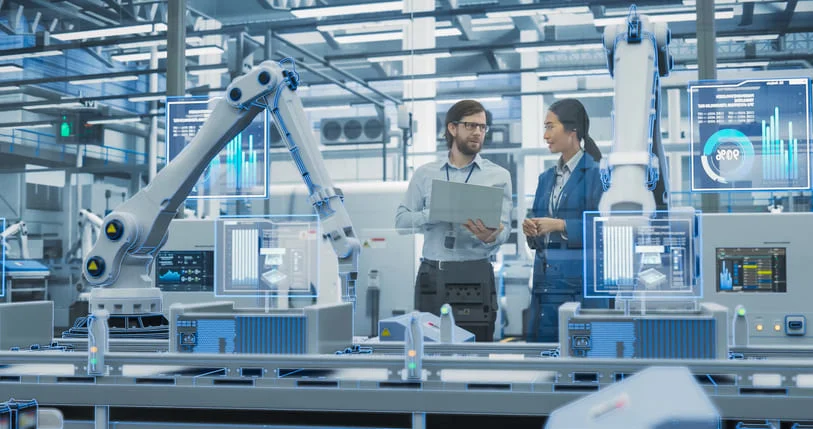
As a result, the primary role of the human worker has shifted from doing the work to managing the systems that perform the work. Instead of manually tightening a bolt, a factory employee now monitors a dashboard that oversees a fleet of autonomous robotic arms. This requires a transition from physical endurance to cognitive agility. Employees are increasingly tasked with technical troubleshooting, system calibration, and complex problem-solving. This change represents a move toward high-value human contribution, where the worker acts as the “brain” behind the automated brawn.
The Rise of Collaborative Robotics
A critical component of this reshaping is the emergence of cobots, or collaborative robots. Unlike traditional industrial robots that had to be caged off from human workers for safety reasons, cobots are designed to work alongside humans. They handle the heavy lifting, the ergonomic strain, and the monotonous precision tasks, while the human worker focuses on judgment, creativity, and adaptability.
This synergy is changing job descriptions in manufacturing and logistics. A worker is no longer measured solely by output speed but by their ability to integrate with digital workflows. This requires a hybrid skill set that combines mechanical knowledge with digital literacy. Those who can seamlessly bridge the gap between software commands and physical output are becoming the most valuable assets in the modern industrial economy.
Reskilling and the Demand for Lifelong Learning
The most significant impact of automation is the acceleration of the skills lifecycle. Technology changes faster than traditional educational systems, meaning that the knowledge acquired today may become obsolete within five to seven years. Consequently, job roles are no longer static “positions” but rather evolving sets of responsibilities.
Companies are now prioritizing candidates who demonstrate “learnability”—the capacity to rapidly acquire new skills. The modern job description often includes requirements for continuous certification and training in new software or hardware interfaces. This culture of lifelong learning is replacing the concept of a “career path” with the concept of a “career portfolio,” where individuals stack various skills to remain relevant in a dynamic market.
The Human Advantage in the Automated Age
Despite the efficiency of algorithms and robots, there are domains where automation falls short. Complex decision-making involving ethical considerations, high-level strategic planning, and interpersonal management remains firmly in the human domain. As machines take over the objective tasks, job roles are concentrating more heavily on these subjective areas.
Management roles, for example, have shifted from delegating tasks to managing human-machine collaboration. Leadership now requires the emotional intelligence to keep a workforce motivated in an environment where they may feel threatened by automation. The human advantage lies in nuance, empathy, and contextual awareness—the ability to understand why something is happening, not just that it is happening. These qualities are increasingly being codified into the core competencies of modern industrial leadership roles.
Impact on Logistics and Service Roles
The reshaping of roles is not limited to the factory floor. In logistics, the integration of autonomous warehouse vehicles and AI-driven supply chain management has created a surge in demand for data analysts and fleet coordinators. These individuals do not move boxes; they move information. They analyze traffic patterns, inventory levels, and delivery windows to optimize the entire network.
Even in maintenance, the role has evolved from reactive repairs to predictive maintenance. Modern technicians use sensor data to identify the point of failure before a machine actually breaks down. This shift from “fixing things that break” to “maintaining continuous uptime” changes the daily rhythm of work, the tools required, and the level of responsibility held by the frontline worker.
Addressing the Transition Anxiety
It is important to acknowledge the anxiety that this transition creates. The fear of displacement is a rational response to rapid technological change. However, history shows that industrial revolutions tend to create more roles than they eliminate; the catch is that these new roles are fundamentally different. The challenge lies in the transition period—the gap between the obsolescence of old roles and the creation of new ones.
To mitigate this, organizations are adopting more robust internal training programs. The most successful companies today are those that treat their existing workforce as a pool of talent to be upgraded rather than a liability to be replaced. By fostering a culture that encourages employees to adopt new technologies, firms can maintain institutional knowledge while embracing the efficiency of automation.
Conclusion
The reshaping of job roles due to industry automation is not a distant future event; it is the current reality. By moving away from manual, repetitive labor toward roles defined by oversight, strategy, and continuous learning, the modern workforce is becoming more sophisticated and, in many ways, more intellectually engaged. The future belongs to those who view technology not as a competitor, but as a sophisticated tool that amplifies human potential.
FAQ
How does automation specifically affect the job security of entry-level workers?
Entry-level roles that rely heavily on manual, repetitive tasks are at the highest risk of being automated. However, this creates an opportunity for new entry-level roles focused on system monitoring, data entry, and basic technical support, which often offer better growth trajectories than manual labor roles.
Will soft skills become more or less important in an automated industry?
Soft skills will become significantly more important. As technical tasks are automated, the value of the human workforce shifts toward communication, leadership, creative problem-solving, and emotional intelligence—skills that machines cannot replicate.
What is the most effective way for an employee to prepare for these changes?
The most effective approach is to adopt a mindset of continuous learning. Focus on developing digital literacy and data proficiency, while simultaneously strengthening interpersonal skills that are difficult for machines to simulate, such as conflict resolution and strategic thinking.
Are there industries that are immune to the reshaping effects of automation?
There is no industry entirely immune. Even sectors that rely on human interaction, such as healthcare or specialized trades, are being transformed by diagnostic tools and precision robotics. The difference is the speed and nature of the integration, not the total avoidance of it.
How should educational institutions adapt to this shifting job market?
Educational institutions need to move away from rigid, long-term degree programs as the sole provider of skills. Instead, they should integrate modular, micro-credentialing systems that allow students and workers to update their skills quickly in response to emerging industrial technologies.
Is it realistic to expect every worker to adapt to these new roles?
Adaptation is a societal challenge. While many will successfully transition, there will be a segment of the workforce that struggles. This necessitates collaboration between governments, educational bodies, and private companies to provide robust transition support, retraining programs, and social safety nets during the period of industrial transformation.
